
Published September 29, 2023
Golf in Charleston, Then and Now

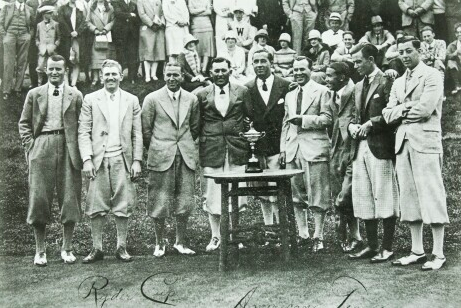
We Love Charleston's Many Firsts
Golf enthusiasts, this one's for you.
Every two years, 24 of the best players from Europe and the United States go head-to-head in match play competition. The 1991 Kiawah Island Ocean Course Ryder Cup set the tone for all future Ryder Cups as the most competitive, most contentious and the most nerve-wracking event in professional golf. Today it lives in history with the nickname "The War By the Shore." Player’s weren’t just playing for themselves. They were playing for their team and more importantly, national pride.
This weekend the Ryder Cup is being held at Marco Simone Golf & Country Club in Rome, Italy, and boy are we excited. Drama, tension, incredible golf, camaraderie and sportsmanship are served in equal measure, captivating an audience of millions around the world. It’s an event that transcends sport, yet remains true to the spirit of its founder, Samuel Ryder. Read more of the history dating back to 1927.
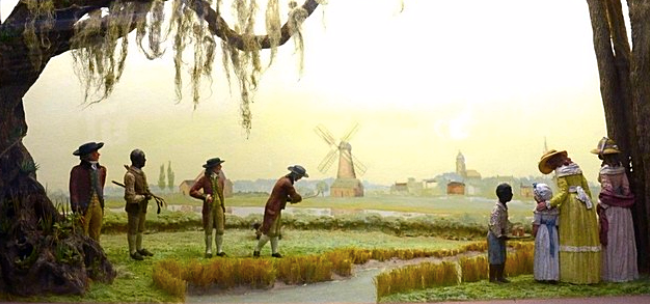
Diorama illustrating the 1786 match at Harleston Green in downtown Charleston, created by R.N.S. Whitelaw and displayed at the Harbour Town Lighthouse Museum on Hilton Head Island. (Sarah Welliver/Island Packet via P & C)
First US Golf Played in Charleston
Did you know the first US golf was played in Charleston? Turns out American golf is rooted in South Carolina. The first shipment of golf equipment from Scotland to the Colonies was delivered to Charleston merchant David Deas in 1743 and contained 432 balls and 96 clubs, according to The Carolina Lowcountry, Birthplace of American Golf, 1786 (Charles Price & George C. Rogers, 1980). The authors claim that the earliest games of golf did not have 'greens' or teeing areas, or even a set number of holes. The crude holes were hard to see, so golfers sent their 'finders' (today's caddies) to stand next to the holes and yell 'fore' as a way of forewarning those nearby to the approaching shot, according to information on the Preservation Society of Charleston's website. A player would tee off at a distance of two club-lengths away from the just-completed hole. Golf balls were called 'featheries' because they were made of boiled feathers stuffed into stitched rawhide; clubs included a 'play club', several 'woods', and an iron for tight spots.
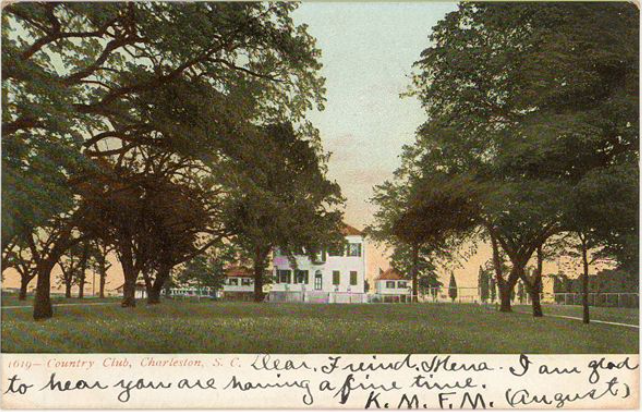
View of Charleston Country Club's clubhouse (Belvidere Plantation House), ca. 1907. Preservation Society of Charleston
The South Carolina Golf Club was formed in 1786 and formally announced in The Southern States Ephemeris: The North and South Carolina and Georgia Almanac for the Year of our Lord 1788. A newspaper announcement on May 28, 1788 requested club members to meet on "Harleston's Green" before adjoining to a local coffee house to attend club business. The 1795 annual meeting announcement included meeting at the "Club House" on Harleston's Green, indicating that the club now had a meeting house of their own. The last known announcement of the South Carolina Golf Club meeting was published in 1799. There was no mention of the South Carolina Golf Club found in public records after that year. It has been speculated that Jefferson's Embargo Act of 1807 played a part by limiting the commercial activity between Charleston and the UK. By this time, too, homes began to crowd around and eventually invade the area of Harleston Green. Where exactly was this segment of undeveloped pastureland on the peninsula that was also used for cattle shows and horse racing? Sources are not altogether in agreement: one suggests that Harleston Green occupied the land between Calhoun and Beaufain, from Rutledge to Barre; another cites between Calhoun and Bull, east of Rutledge, and yet another merely 'near the corner of Pitt and Bull Streets'. Anyway, we know that Harleston Green was indeed inside Harleston Village, which totally makes sense and legend has it that Harleston Green's membership dues have been carried forward in today's parlance as 'Green Fees'. How 'bout that?
Read more about the First US Golf Played in Charleston, written by Kimber Price. We don't just live here, we love it here. Keep reading to find out why.
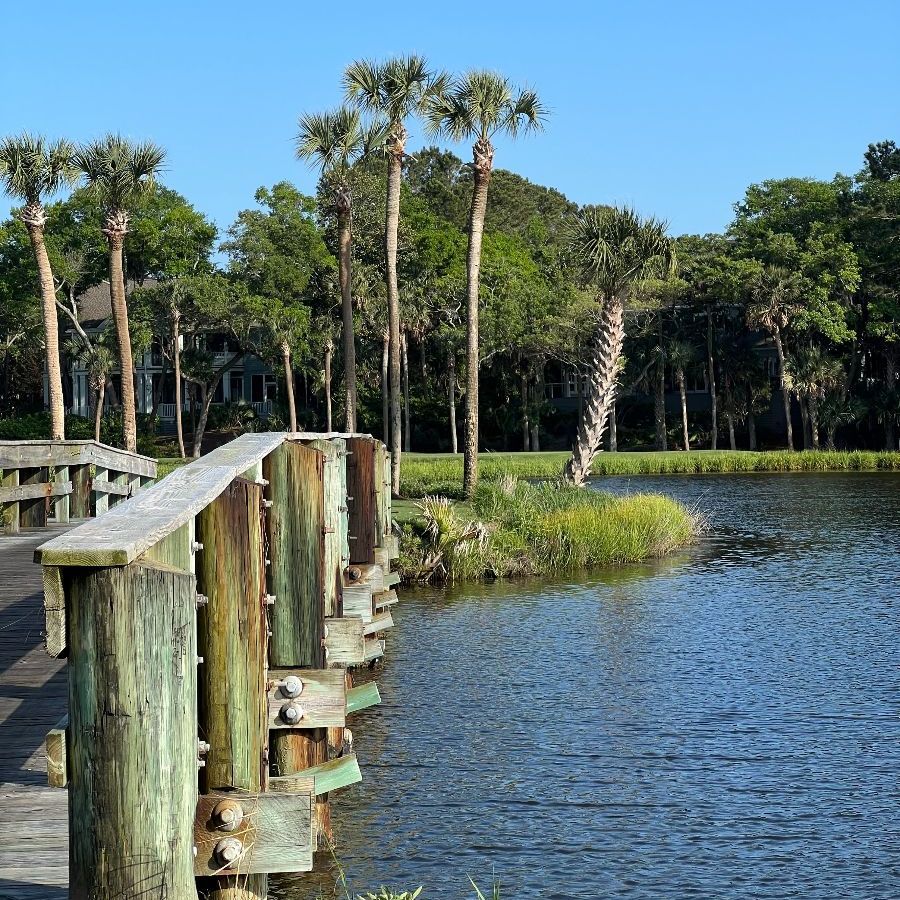
9th hole at Osprey Point, Kiawah Island Golf Resort. Photo provided by Karina Michael.
Golf in the Lowcountry
One of the many reasons we love present day Charleston is for the variety of golf courses home to the Lowcountry - from Kiawah Island to Isle of Palms, and everything in between. How lucky are we to have courses designed by Pete Dye, Tom Fazio, Jack Nicklaus, Tom Jackson, and Mike Strantz to name a few, right at our fingertips?
Interested in learning more about our local courses? Reach out to our Admin, Karina Michael. A Women's Golf Association (WGA) Member of The Links at Stono Ferry, The Plantation Course at Edisto, and Tot Hill Farm Golf Club, she's just about as hopelessly addicted to the game as they come. When she's not in our office, you can catch her on the course. Connect with Karina.
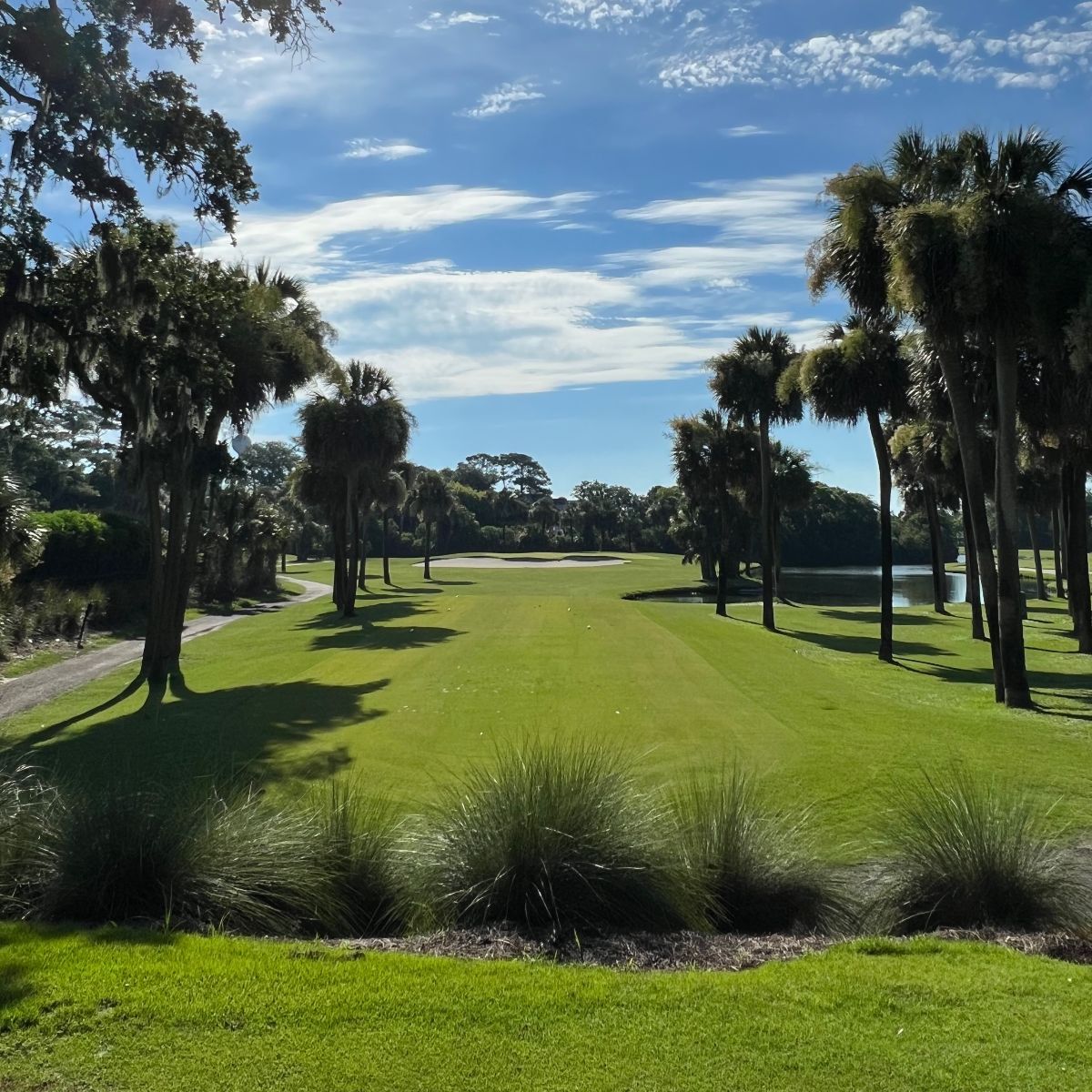
3rd hole at The Plantation Course at Edisto. Photo provided by Karina Michael.
Featured Listing
Speaking of The Plantation Course at Edisto, we recently had the pleasure of representing both the sellers and buyers of the cutest deep water retreat (featured below) just a short drive from the course. We can't wait for the new owners to enjoy all that Edisto Island has to offer!
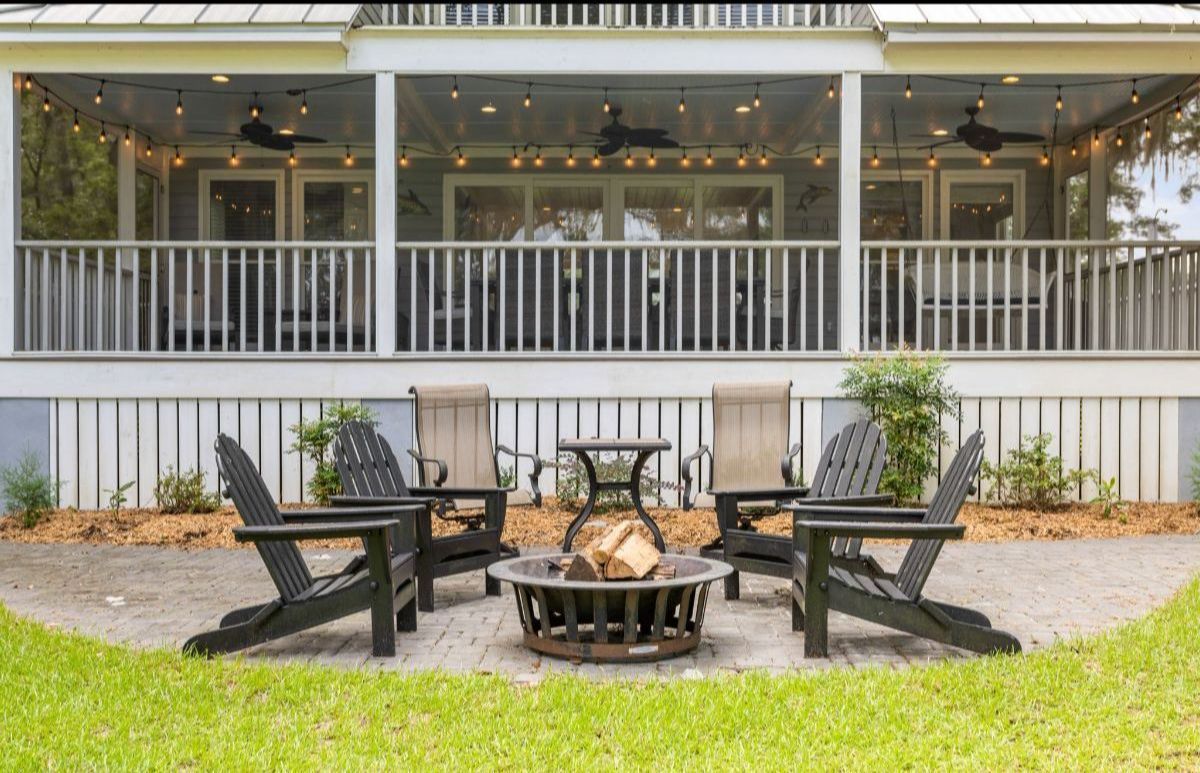
8612 Pope Landing Road, Edisto Island | Middleton Plantation | 0.7 Acres | Waterfront | Private Dock
Golf in the Lowcountry
Whether you find yourself on or off the course this weekend, we hope you crack open a cold one and enjoy this years Ryder Cup.
Cheers, Let's go Team USA!
Want More?
Lois Lane
| Lois Lane Properties
or another way